Your earned media already drives AI search visibility
 Gabriel Tan
Founder and Strategy Lead · AIGP (IAPP) · Lean Six Sigma Green Belt
Gabriel Tan
Founder and Strategy Lead · AIGP (IAPP) · Lean Six Sigma Green Belt
By Gabriel Tan | July 2026
A managing director in Singapore is halfway through a quarterly review. The client has the coverage report open. Twelve hits, two in the business press, a byline in a trade title. A good quarter by any measure the firm has ever used.
Then the client looks up. "I asked ChatGPT about us last night. It barely mentioned the company. My competitor came up twice."
The room goes quiet. The coverage is real. The AI answer does not show it. And for a moment the client is not thinking about the twelve hits. They are wondering what they are paying for.
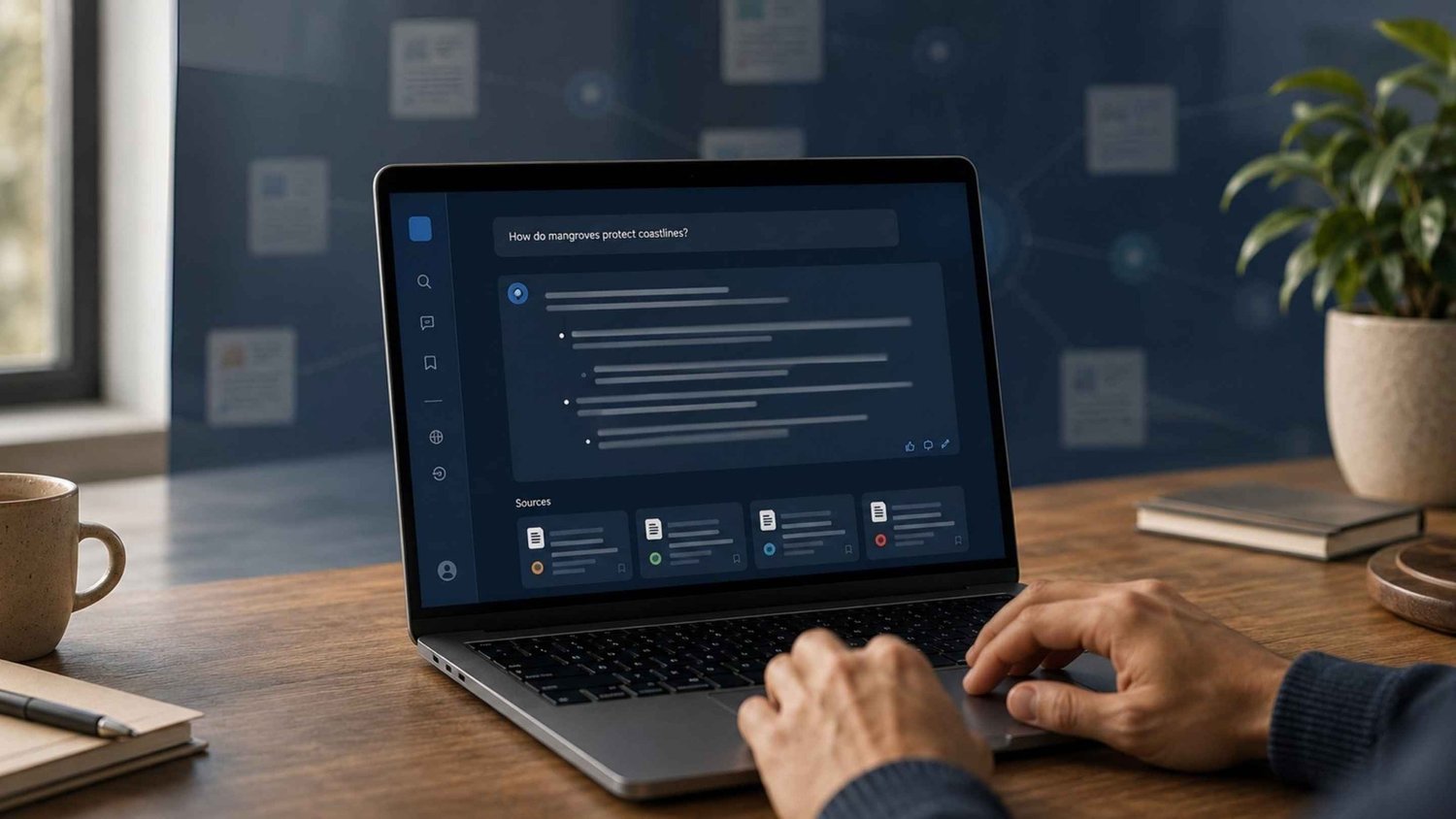
Sit with that gap, because it is the whole point. The placements, the quotes and the third-party mentions your firm already produced are the exact material these tools read when they answer a question about your client. You make the input. You just do not show the output.
Here is why it matters this month. In May 2026, Muck Rack analysed more than 25 million links that ChatGPT, Claude and Gemini used to build their answers across 17 industries. Earned media accounted for 84 per cent of every citation. Journalism alone was 27 per cent. Paid and advertorial content was 0.3 per cent. The coverage your team fights for is what the machines quote. The advertising is not.
What the tools actually quote
Answer engines run on earned media, not owned content. A client that has spent years and budget on its own website, blog and social feed will still look thin inside an AI answer, because those owned pages rarely surface as citations. The press coverage does. Muck Rack has run this study three times since July 2025, and the earned-media share has held between 82 and 89 per cent every time. This is not a blip you can wait out.
That should read as good news for your firm. The thing the tools reward is the thing you already sell.
Your client is already checking
The person doing the checking is your client, and their buyer. A Search Engine Land study this year found 37 per cent of consumers now begin a search with an AI tool rather than Google. In Singapore, professionals sit among the heaviest users of generative AI anywhere in the world.
So when a client wants to know how their brand looks to the market, they ask ChatGPT and read the paragraph it gives back as the truth. That paragraph now competes with your coverage report for the same job, telling the client whether the programme is working. When the two disagree, the client trusts the one they generated themselves. That is a retention risk your firm created without knowing it existed.
The number, defined
Loose talk about visibility will not survive a client who asks how you measured it. Two numbers do the job.
The first is your visibility rate, the leading one.
Visibility rate = the questions where your client appears, divided by all the questions you asked.
The second is AI Citation Share, the competitive one.
AI Citation Share = your client's mentions, divided by every brand mention in the same answers, your client plus the competitors named next to them.
Make it concrete. Take twenty questions a real buyer would ask in the category. Run each through the four main tools, three times over, because the answers shift from one run to the next. That is 240 answers. Your client is named in 72 of them, so the visibility rate is 30 per cent. Inside those 72 answers, 90 mentions are your client and 360 are brands in total, so the AI Citation Share is 25 per cent. One number says how often you show up. The other says how much of the conversation is yours.
Two rules keep the number honest. Fix the question list and keep it, because change the questions and you change the score. And run each question several times, because a single pull is one roll of the dice, not a measurement. Report the trend on that fixed set, never a lone reading.
How you tie it to your own work
The number only earns its place if you can connect it to what your team did. You cannot prove strict cause. The same score moves on the client's own website, on Wikipedia, on review sites, and on a competitor's coverage. What you can build is an evidence trail.
Track two things side by side: the share, and the list of sources the tools cite for your questions. When you land a placement, watch for two signs. The outlet or the piece itself enters that citation list. And the share rises on the questions tied to that story while unrelated questions stay flat. Movement that lines up by topic points at your work far better than a total that could have moved for any reason.
One thing to know about timing. The tools that search live, Perplexity and Google's AI Overviews, pick up a new placement within days. A model answering from memory only catches up after its next training cycle, months later. So your effort shows first in the live-search answers. Report the share as a contribution your programme makes, not a result you caused.
What to do this week
Start with three steps and about an hour.
Baseline one client. 30 minutes. Write down twenty buyer questions, run them through ChatGPT and Perplexity, and record two things: how often your client appears, and which sources the tools cite. That is your visibility rate and your source list on day one.
Match the sources to your work. 20 minutes. Compare that source list against the coverage you secured. You will see which placements the tools already pick up and which strong hits they walk past, which tells you what counts as quotable in your client's sector.
Put it in the report. 10 minutes. Add one line to your next client update: the visibility rate and AI Citation Share this quarter, with the questions you tested underneath. One line turns an invisible outcome into a visible one, before the client raises it first.
Do those three and you have moved from guessing to measuring, on an account that already pays you a retainer.
The review you want to walk into
Come the next quarterly review, the client will type their name into ChatGPT again. They will do it whether or not you are in the room, and they will read whatever comes back as the verdict on your year.
The question is whether the answer names them, whether you saw it coming a quarter earlier, and whether you can show the placements that moved it. The programme you already run feeds these tools. Measuring it, and tying it back to your work, is how the work finally gets the credit, in the place your client now trusts more than the coverage report in front of them.
Gabriel Tan is the founder of Mekong Bridge Advisory. He builds structured execution systems for PR and communications firms.
info@mekongbridge.com | www.mekongbridge.com