Public relations reporting: build case studies in five minutes
 Gabriel Tan
Founder and Strategy Lead · AIGP (IAPP) · Lean Six Sigma Green Belt
Gabriel Tan
Founder and Strategy Lead · AIGP (IAPP) · Lean Six Sigma Green Belt
A senior colleague at one of my client agencies asked me to fix a small problem that was quietly costing her team pitches.
Her business development team's pitching efforts were hampered because they could not produce or find relevant case studies fast enough. By the time the right past project was found, scoped, and reformatted into a slide that fit the new deck, the pitch had moved on. Two weeks of searching. Eight hours of formatting. A reference that landed late and looked tired.
Public relations reporting carries that pattern across most agencies. Past work exists. Nobody can retrieve it fast enough to use it when it matters.
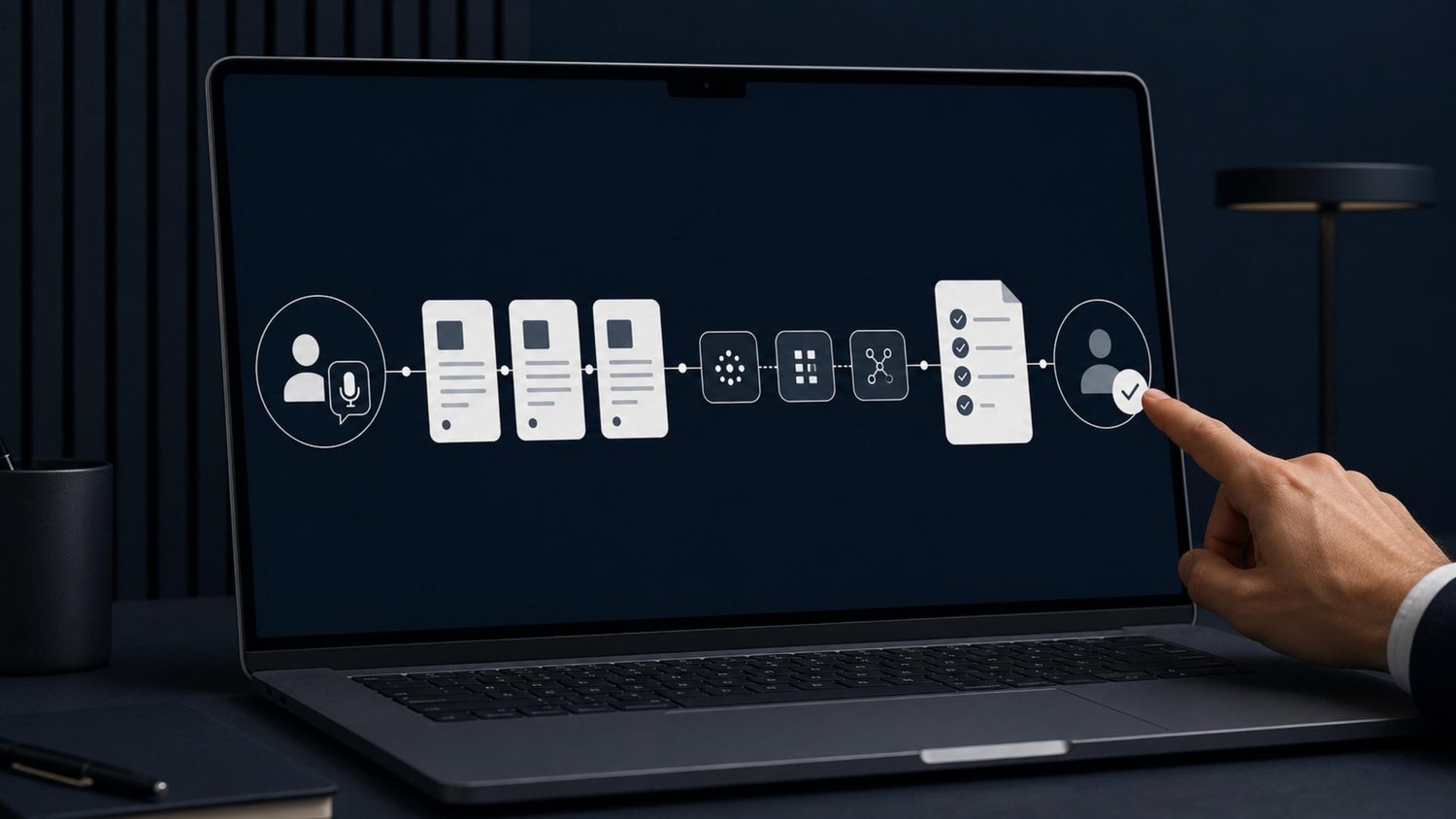
I built her a one-page case study generator instead. The team now produces a fitted, branded one-pager from a past project in under ten minutes. The workflow has three parts: the process, the prompt, and the output style.
Here is how to build one.
The process
1. Have all your seniors pick two or three past projects they know well. Start with familiar ones so they can verify the output against their own memory. Pull the project files together (they usually sit inside one folder in SharePoint or Google Drive): the original brief, deliverables, results data, media coverage, and any internal recaps.
2. Connect the files to Claude. Either point Claude Cowork at the project folder or upload the files into a Claude Project. Cowork is faster if you have multiple files spread across folders.
3. Paste the prompt below into Claude. Then use the voice button to give a stream-of-consciousness briefing covering four dimensions: Situation (the client's position and challenges before the project), Target (what the client wanted to achieve), Action (what your team did), and Result (what happened, in numbers). Aim for three to five minutes of natural speaking, like a pitch debrief to a colleague.
4. Answer Claude's questions. It will ask clarifying questions before drafting. Expect three to five rounds. It will press for hard numbers, specific deliverables, channels used, and anything sensitive that should stay internal.
5. Review the draft, then manually add photos and visuals from the original project files to the final slide.
The prompt
Paste this into Claude after connecting your source files and before your voice briefing.
"You are a senior PR consultant. Your job is to produce a one-page slide-format case study for external BD use, based on the voice-prompted briefing below and the source files connected to this chat.Read the voice prompt and all source files thoroughly. Ask clarifying questions in batches of three to five before drafting. Specifically seek: hard numbers (deal size, results metrics, performance data), audience or stakeholder mix, post-project milestones, and sensitive items that must remain internal (flag these as [SENSITIVE: REVIEW]).Draft the case study once all gaps are closed.Output structure: A) Headline: one line, lead with a specific numerical result. B) Client snapshot: two lines covering sector, geography, scope, date, and starting position. C) The brief: one short paragraph combining Situation and Target. D) What the team did: three to four one-line bullets detailing specific actions and channels. E) Result: three to four one-line bullets with hard numbers and performance data. F) Pull-quote (optional): one cleared sentence from the client or a senior stakeholder.Style: plain British English, short sentences, no jargon. Use facts instead of adjectives. No em dashes. Total word count under 250.Do not invent numbers. Avoid promotional filler. Flag sensitive items for review."
The output style
The case study should read like a senior consultant speaking to a prospect. Lead with results, support them with specific data, keep the language clean. The entire slide should be readable in 30 seconds. That is the bar for any client report example that needs to convert in a pitch room.
Storage and retrieval
Once the one-pagers are built, create a Google Sheet with one row per case study and four tag columns: sector (fintech, healthcare, property, logistics, consumer), problem type (financial comms, crisis, rebrand, product launch, executive positioning), service delivered (media relations, investor comms, content programme, event), and company or deal size (under 50M, 50 to 200M, over 200M). Add a hyperlink column pointing to the one-pager in a shared Drive folder. The BD team filters the sheet, clicks the link, and grabs the file in seconds.
For teams already using Claude, upload all completed case studies into a Claude Project as knowledge files. The BD team types a natural language query: "case study about helping a logistics company with IPO comms, deal size under 200 million." Claude returns the closest match. Faster than filtering a spreadsheet, but depends on your team already having Claude in their workflow.
The agency that piloted this now has 30 case studies tagged and searchable. The last three pitches went out with fitted references on the same day the brief came in. Before the system, that took a week.
Most BD teams in communications firms have plenty of proof to show. It is buried in old decks nobody has time to dig through. The case studies already exist. The system makes them retrievable. That is agency client reporting working at the speed pitches actually move.
What is the next repeatable task on your team that is still being done from scratch every time?
Gabriel Tan is the founder of Mekong Bridge Advisory. He builds structured execution systems for PR and communications firms.
info@mekongbridge.com| www.mekongbridge.com